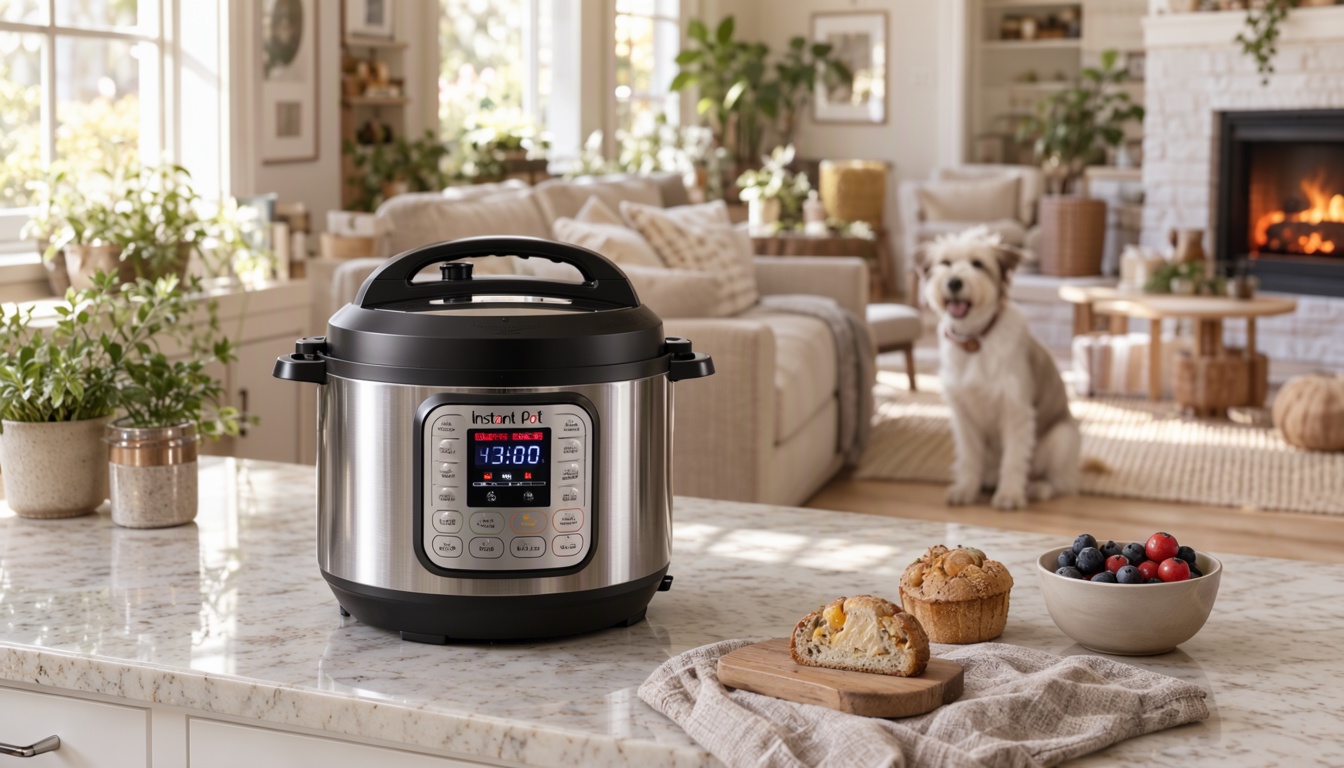
An overview of the two cooking technologies
Both appliances cook food in a sealed pot where steam builds pressure. Higher pressure raises the boiling point of water, so food cooks faster than it would in an open pot.
The real difference is how you control the heat. A traditional pressure cooker relies on your stove and your attention. An Instant Pot relies on a built-in heating element, sensors and a programmed cycle.
That one difference shapes almost everything else: ease of use, cleanup, cost, counter space and how much you can cook besides pressure-cooked meals.
What is a traditional pressure cooker?
A traditional pressure cooker is a heavy pot with a locking lid and a pressure regulator. You set it on a gas, electric or (if the base is compatible) induction burner and manage the heat yourself.
You bring it up to pressure on high heat, then lower the burner to hold that pressure steady. When the timer you set on your phone or stove goes off, you release the pressure by hand or let it drop naturally.
Many models are stainless steel or aluminum, and they have few parts. If you want to compare options, a stovetop pressure cooker is a good place to start browsing.
What is an Instant Pot?
An Instant Pot is a brand of electric multicooker. It plugs into the wall, has a stainless steel inner pot and runs preset programs with a digital control panel.
Pressure cooking is its headline feature, but many models also slow cook, sauté, steam and keep food warm. Some versions add extras such as yogurt or sous vide modes, so check the exact model before you buy.
A common starting point is a 6-quart Instant Pot. For a deeper look at who benefits most, read our guide on whether an Instant Pot is worth it.
What is the main difference between an Instant Pot and a traditional pressure cooker?
The main difference is the heat source and control. A stovetop cooker uses your burner and your judgment. An Instant Pot heats itself and manages pressure automatically.
That makes the Instant Pot more hands-off and the stovetop cooker more manual. Neither is wrong. It depends on how much attention you want to give dinner.
Functionality comparison at a glance
A stovetop cooker is a focused tool for pressure cooking. An Instant Pot is a multi-function appliance. This table shows the general differences, though individual models vary.
| Factor | Traditional pressure cooker | Instant Pot |
|---|---|---|
| Heat source | Your stove | Built-in electric element |
| Controls | Manual | Digital presets and timer |
| Other cooking modes | Usually none | Often slow cook, sauté, steam, warm |
| Counter space | Stored in a cabinet | Takes counter or shelf space |
| Cleaning | Pot and lid, fewer parts | Inner pot, lid, sealing ring, steam parts |
| Best for | Cooks who like control | Cooks who like convenience |
Pressure cooking performance
Both appliances cook under pressure and can handle stews, beans, rice, braises and stocks. A stovetop cooker may reach and hold a higher pressure than some electric models, depending on the design.
Check the manual for the stated pressure range of any model you are considering. Do not assume two models match, because pressure settings vary by brand and product line.
Which option is more versatile for different types of cooking?
The Instant Pot is more versatile because one appliance can pressure cook, sauté, slow cook and steam. A stovetop pressure cooker mainly does one job, though you can use the base pot for simple tasks.
If you already own a slow cooker or rice cooker, a multicooker may overlap with them. If counter space is tight, a single stovetop pot may make more sense. You may also want to compare it with an air fryer before deciding what to keep on your counter.
Ease of use and programming
The Instant Pot is easier for beginners. You choose a program, set a time and walk away. A stovetop cooker asks you to watch the burner and adjust heat to keep pressure steady.
That said, a stovetop cooker is not complicated. After a few uses, most people learn how the heat dial and pressure indicator work.
- Instant Pot: timers, presets, delayed start on many models and automatic keep-warm.
- Stovetop cooker: manual heat, no delay start and no automatic shutoff in most designs.
Is cooking time significantly different between the two?
Cook times at pressure are often similar, but total time differs. An Instant Pot needs time to heat up and build pressure. A stovetop cooker on a strong burner can sometimes get there faster.
Release time also counts. Natural release adds minutes in either appliance, so read the recipe for the full timeline, not just the pressure time.
Tip: When you adapt a recipe, start with the shorter time. You can always seal the lid and cook a few more minutes, but you cannot undo overcooked beans or meat.
Cooking accuracy and consistency
An Instant Pot offers more repeatable results because the machine regulates heat for you. With a stovetop cooker, accuracy depends on how well you manage the burner.
If you cook the same few meals every week, the automation is helpful. If you like adjusting as you go, the manual control may suit you better.
Are safety features better in the Instant Pot?
Not automatically. Modern versions of both are built with multiple safety features, but electric models add automated monitoring. Always check the manual of the exact model for its listed safeguards.
Common safety features on pressure cookers include:
- A locking lid that is designed to stay closed under pressure
- A pressure release valve or regulator
- A backup vent or safety valve on many designs
Instant Pot safety features
Electric pressure cookers often add temperature and pressure sensors and automatic shutoff. Exact features vary by model, so read the product listing and manual.
For safe use of any pressure cooker, the USDA offers guidance on pressure canning and cooking at fsis.usda.gov. Never use a pressure cooker for canning unless the manufacturer says it is designed for that.
Which one is easier to clean and maintain?
A stovetop cooker is usually simpler to maintain because it has fewer parts. An Instant Pot has a removable inner pot that is easy to wash, but the lid, sealing ring and vent need regular attention.
- Stovetop: wash the pot and lid, and check the gasket and valve.
- Instant Pot: wash the inner pot, lid and ring, and wipe the base with a damp cloth. Never submerge the base.
Sealing rings can hold food odors. Some owners keep a spare, such as a silicone sealing ring, for savory and sweet dishes.
Can you use an Instant Pot for all recipes designed for a traditional pressure cooker?
Mostly, but not always. Many recipes transfer with small timing changes. Recipes that need very high pressure, or that were written for a specific pot, may need adjustment.
Recipes for canning are the key exception. Do not use a regular pressure cooker or multicooker for canning unless the maker approves it for that purpose.
Conclusion: which one is right for you?
Pick an Instant Pot if you want convenience, presets and several cooking modes in one appliance. Pick a stovetop pressure cooker if you want control, simplicity and easy storage.
- Busy weeknights: Instant Pot.
- Small kitchen with a good stove: stovetop cooker.
- Beginner cooks: Instant Pot.
- Cooks who like manual control: stovetop cooker.
Browse more picks in our kitchen category and compare sizes before you buy. A 6-quart pot suits many small households, but check your own needs.