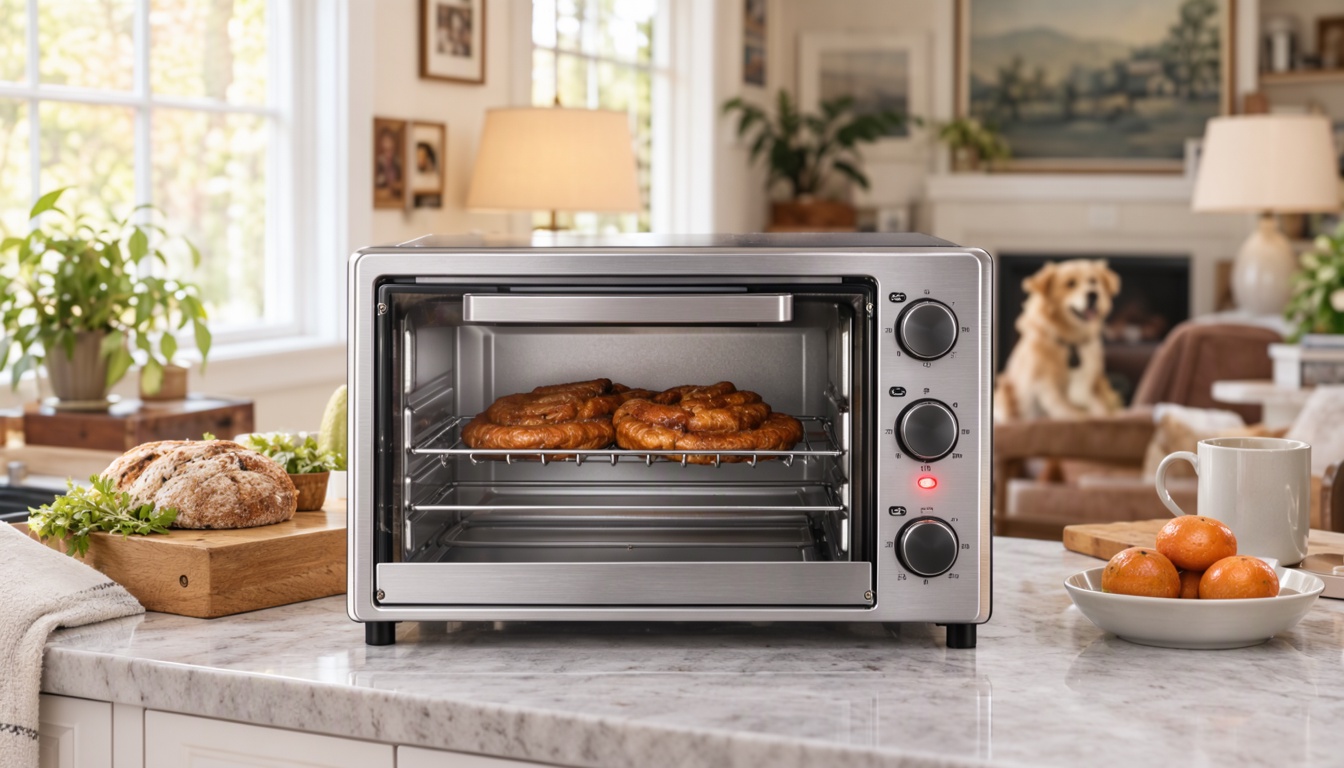
Toaster Oven vs Conventional Oven: The Short Answer
A toaster oven can replace your regular oven if you cook small portions. It cannot replace it if you bake for crowds, roast large cuts, or use full-size sheet pans. Your household size and cooking habits decide the answer.
When you compare a toaster oven vs conventional oven, the main trade-off is capacity against convenience. A countertop unit is quick and compact. A built-in range oven is bigger and more flexible.
- Choose a toaster oven if you cook for one to three people, rent, or have a small kitchen.
- Keep a conventional oven if you host, bake in volume, or cook whole birds.
- Own both if you want a fast daily option and a big oven for special meals.
What Is a Toaster Oven?
A toaster oven is a small countertop appliance with heating elements, a rack, and a tray. It toasts, bakes, broils, and reheats food. Many models add convection fans or air fry modes.
Features vary a lot by brand and size. Some are basic toasters with a bake setting. Others work like a mini oven with temperature control, timers, and several cooking modes. If you want one with a fan, look for a convection toaster oven and check the interior dimensions first.
If you are also weighing an air fryer, read our guide on whether an air fryer is worth it. Many toaster ovens now overlap with air fryers.
Can You Use a Toaster Oven Like a Full-Size Oven?
Yes, for many everyday tasks. You can bake, roast, broil, and reheat. The limits are space, rack positions, and how evenly the heat spreads in a small box.
A toaster oven works well for these jobs:
- Toast, bagels, and melts
- Roasting vegetables in small batches
- Chicken thighs, fish fillets, and sausages
- Small pizzas, casseroles, and cookies
- Reheating leftovers without drying them out
It struggles with large roasts, tall cakes, and big baking dishes. Always measure your pans before you buy.
Main Differences Between the Two Ovens
The biggest differences are size, preheat time, and capacity. Toaster ovens are smaller and sit on a counter. Conventional ovens are built in, larger, and better for volume.
| Factor | Toaster oven | Conventional oven |
|---|---|---|
| Capacity | Small to medium; often fits a 9x13 pan or a small pizza, depending on model | Large; fits full-size sheet pans and big roasts |
| Preheat | Usually shorter | Usually longer |
| Placement | Countertop; needs clearance | Built into the range |
| Heat evenness | Varies; may need turning | Generally steadier for large batches |
| Best for | Small meals and quick jobs | Big meals and heavy baking |
Cooking Techniques: Toaster Oven vs Conventional Oven
Both ovens bake, roast, and broil. The difference is how close the food sits to the heating elements. In a toaster oven, food is closer, so browning is faster and burning is easier.
Toaster Oven Cooking Techniques
Watch food more closely and adjust rack position. Food near the top elements browns fast, so use the middle rack for most dishes.
- Lower the temperature slightly or shorten the time if edges brown too quickly.
- Rotate the pan halfway through for even results.
- Use a convection setting, if you have one, for crisper vegetables and poultry skin.
- Use the manual to check pan size limits.
Tip: Check food a few minutes early the first few times you use a new toaster oven. Every model runs a little differently, so learn yours before you trust a recipe time.
Conventional Oven Cooking Techniques
A full-size oven gives you more room to cook several dishes at once. It suits long roasts, layered cakes, and multiple trays. Heat is usually more stable once it is preheated.
You can use several racks, but swap trays during cooking if the bottom or top browns unevenly. Most recipes are written for this kind of oven, so timings usually translate directly.
Can You Use the Same Recipes in Both?
Mostly yes, with adjustments. Recipes assume a full-size oven, so you may need smaller portions, shorter times, or lower heat in a toaster oven. Use a thermometer to confirm doneness.
For meat and poultry, rely on internal temperature rather than the clock. The FDA safe food handling page and related food safety resources cover safe handling and cooking. An instant-read thermometer helps in either oven.
Energy Efficiency: Toaster Oven vs Conventional Oven
A toaster oven often uses less energy for small meals because it heats a smaller space and preheats faster. For large meals, a full-size oven can make more sense because you cook more at once.
Actual savings depend on your model, cooking time, and how full the oven is. ENERGY STAR notes that certified products meet efficiency guidelines, so you can check energystar.gov for current product information.
- Toaster oven: good for small portions, reheating, and short cooks.
- Conventional oven: better when you fill several racks or cook for a group.
Space and Portability
A toaster oven needs counter space and ventilation. A conventional oven needs none of your counter but is fixed in place. If you rent, move often, or lack a working oven, portability matters.
- Measure counter depth, width, and the height under your cabinets.
- Leave clearance around the unit as the manual instructs.
- Check the interior size, not just the exterior.
Cost: Toaster Oven vs Conventional Oven
A toaster oven usually costs far less up front than a range or wall oven. Prices vary by brand, features, and sales, so check current listings on Amazon before you decide.
| Cost factor | Toaster oven | Conventional oven |
|---|---|---|
| Purchase | Lower | Much higher |
| Installation | None; plug in | May require hookup or a professional |
| Running cost | Often lower for small meals | Often better value for large batches |
| Replacement | Easy to swap | Major project |
Browse our kitchen category for more small appliance guides.
Safety, Cookware, and Durability
Both ovens are safe when used as directed. Toaster ovens get hot on the outside and sit near cabinets, so clearance matters. Always follow the manufacturer manual for cookware and placement.
Do They Have Different Safety Features?
Features vary by model. Toaster ovens often have auto shut-off timers. Full-size ovens may have locks or cool-touch doors. Keep flammable items away from either, and follow the manufacturer manual.
Can You Use Metal Cookware?
Generally yes, if it is oven-safe and fits with space around it. Do not let metal touch heating elements. Avoid foil that blocks airflow or touches the elements unless your manual allows it.
Which Lasts Longer?
Full-size ovens are usually built for longer service life, while countertop units are easier and cheaper to replace. Build quality varies by brand, so read reviews and warranty terms.
Which Should You Choose?
Pick based on how you cook, not on features alone. Most small households can use a toaster oven for daily meals and save the big oven for occasions.
- Count how many people you usually cook for.
- Measure the pans you already own.
- Decide whether you need air fry or convection modes.
- Check counter space and outlet access.
- Compare current prices.
If you cook one-pot meals too, see our guide on whether an Instant Pot is worth it. For a countertop upgrade, try a air fryer toaster oven combo.