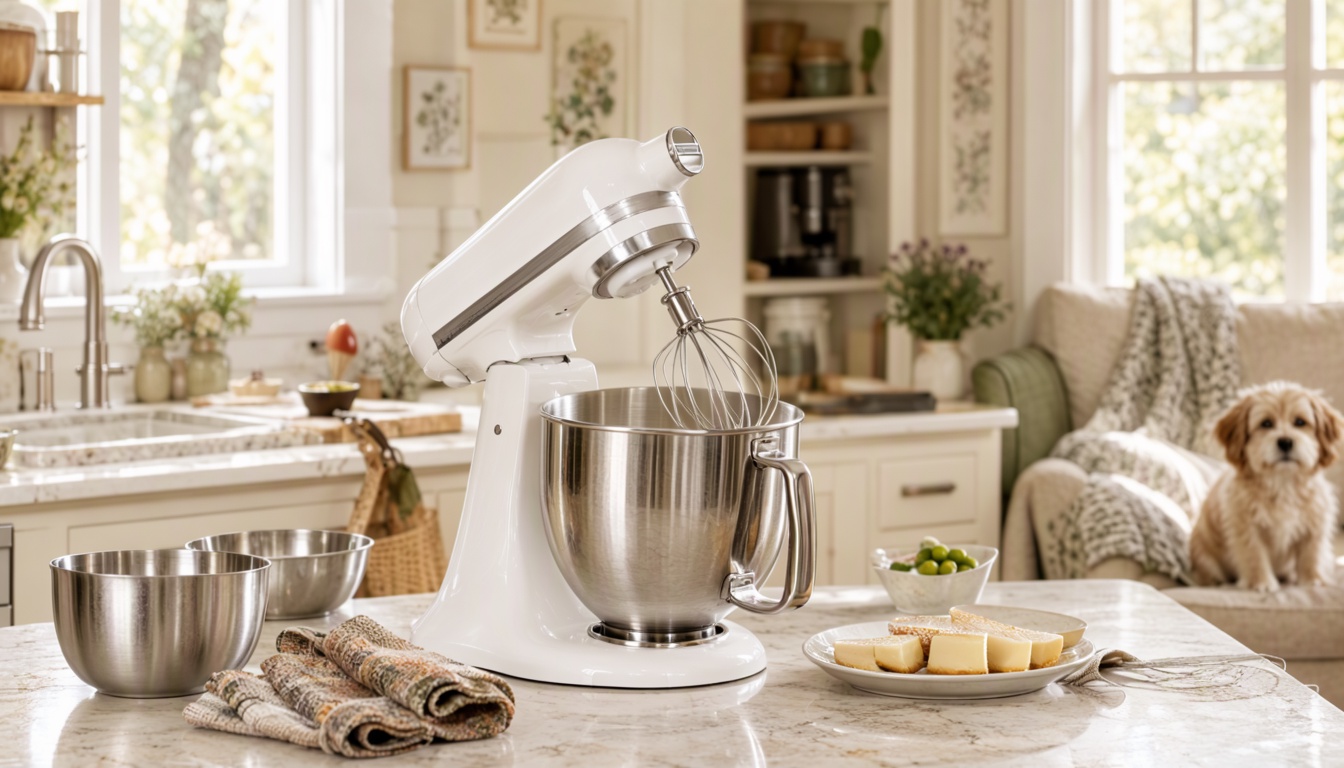
Stand Mixer vs Hand Mixer: The Quick Answer
Pick a stand mixer if you bake weekly or work with stiff dough. Pick a hand mixer if you bake a few times a month and want something small and affordable.
Both tools beat eggs, whip cream and cream butter with sugar. The difference is how they do it and how much they can handle. A stand mixer holds the bowl and does the work while your hands stay free. A hand mixer is a light tool you hold, so you control the speed and the movement.
- Choose a stand mixer for bread, pizza dough, double batches and long mixing jobs.
- Choose a hand mixer for cake batter, whipped cream, mashed potatoes and occasional baking.
- Own both only if you bake often and also want a quick tool for small jobs.
Hand Mixer vs Stand Mixer: The Fundamentals
A stand mixer is a motor on a base with a locked bowl and attachments. A hand mixer is a portable motor with two beaters. That one design difference drives almost every other trade-off.
Stand mixers usually come with a flat beater, a whisk and a dough hook. Many have a tilt-back head or a lift lever, and some accept extra attachments such as pasta rollers or grinders. Hand mixers typically come with two beaters and sometimes dough hooks or a whisk. Specs vary by model, so check the product listing for what is actually in the box.
| Factor | Stand mixer | Hand mixer |
|---|---|---|
| Typical cost | Higher; often several hundred dollars for popular models | Lower; many are under $50 |
| Storage | Large and heavy; often lives on the counter | Fits in a drawer or small cabinet |
| Hands-free mixing | Yes | No |
| Stiff dough | Better suited | Often struggles |
| Bowl choice | Its own bowl, fixed size | Any bowl or pot |
| Cleanup | Bowl and attachments | Just the beaters |
Prices change often, so treat the cost row as a general range and check current listings.
Stand Mixers: Pros and Cons
A stand mixer gives you power, capacity and free hands. The trade-offs are price, size and weight. If you will use it often, those costs are easier to justify.
Where a stand mixer wins
The biggest benefit is hands-free mixing. You can add flour, scrape the bowl or measure the next ingredient while the machine runs.
- Handles bread dough, bagel dough and heavy cookie dough more steadily.
- Bowl capacity suits double batches and holiday baking.
- Consistent mixing for meringue, buttercream and whipped cream.
- Optional attachments can expand what it does.
Where a stand mixer falls short
The main drawbacks are cost and footprint. Many models are heavy, so moving one in and out of a cabinet gets old fast.
- Higher price than any hand mixer.
- Takes real counter or cabinet space.
- Small amounts can get lost at the bottom of a large bowl.
- More parts to wash.
If you are still unsure about the investment, read our guide on whether a stand mixer is worth it. If you are ready to compare, you can browse a 5-quart tilt-head stand mixer, a common size for home bakers.
Hand Mixers: Pros and Cons
A hand mixer is cheap, compact and flexible. It handles most everyday baking, but it is less suited to thick dough and you have to hold it the whole time.
Where a hand mixer wins
The low price and small size make it easy to own. You can mix in any bowl, even a saucepan on the stove for things like whipped toppings or custards.
- Fits in a drawer, which suits small kitchens and dorms.
- Quick to grab for pancake batter, eggs or mashed potatoes.
- Easy to clean, usually just two beaters.
- Works well for small amounts that a big bowl would swallow.
Where a hand mixer falls short
The main limit is power and endurance, both the motor's and your own. Long jobs tire your arm, and thick dough can strain the motor.
- Not ideal for stiff bread dough or very large batches.
- You must hold it, so your hands are busy.
- Mixing results depend more on your technique.
- Cheap models can be loud and have fewer speeds.
A basic 5-speed hand mixer covers most light baking. Look for a model with a locking cord or a storage case if drawer space is tight.
How Space, Power and Recipes Decide It
Start with three questions: where will it live, what will you make, and how often. Your answers usually point clearly to one tool.
Space
Measure your storage spot first. Counter space matters most for stand mixers because few people want to lift a heavy machine from a cabinet every time.
Check the height too. Tilt-head models need clearance to open under upper cabinets, and the product listing should give the dimensions.
Power
Wattage alone is a poor guide. Motor design, gearing and build quality affect how a mixer handles dough, so compare reviews and recommended uses rather than just the number on the box.
For heavy dough, look for a stand mixer with a dough hook and a stable base. For light batters, most hand mixers are enough.
Recipes
Match the tool to what you actually bake. Use this quick checklist.
- Bread, pizza and bagels: stand mixer.
- Cakes, brownies and muffins: either one.
- Whipped cream and meringue: either one, though a stand mixer is easier for long whipping.
- Mashed potatoes: hand mixer, in the pot.
- Large cookie batches: stand mixer.
Tip: Write down the last five things you baked. If none needed stiff dough or a double batch, a hand mixer is probably enough.
Should I Buy a Hand Mixer or a Stand Mixer?
Buy a hand mixer if you bake occasionally, have limited space or want to keep costs low. Buy a stand mixer if you bake often, make dough or want hands-free mixing.
The right choice is the one you will actually use. A stand mixer that sits unused costs more than a hand mixer that comes out every week.
| If you... | Consider |
|---|---|
| Bake a few times a month | Hand mixer |
| Bake bread every week | Stand mixer |
| Live in a small apartment | Hand mixer |
| Cook for a large family or bake for events | Stand mixer |
| Want to try baking first | Hand mixer, upgrade later |
| Have arm or wrist pain | Stand mixer |
How to Choose Without Overspending
Start with the cheaper tool and upgrade only if you hit its limits. That path avoids paying for capacity you never use.
- Set a budget first. Decide what you are willing to spend before you read reviews.
- Skip extra attachments until you know you will use them.
- Check the bowl size. A bigger bowl is only useful if you make big batches.
- Look at warranty terms and how easy it is to buy replacement beaters or bowls.
- Consider used or refurbished stand mixers from reputable sellers, and read the return policy.
If you want a machine that handles dough but your budget is tight, a hand mixer with dough hooks can manage soft doughs in small amounts. Do not expect it to match a stand mixer on stiff bread dough.
Tip: Check the manufacturer's manual for maximum run time and dough limits. Running a motor past those limits can shorten its life.
Safety and Care Basics
Unplug any mixer before you change beaters or clean it. This simple habit prevents accidental starts and injuries.
Raw eggs and uncooked dough can carry bacteria, so wash your hands, beaters and bowls well after use. The USDA has guidance on safe handling of eggs and raw dough at fsis.usda.gov. Always follow your mixer's manual for cleaning, since not every part is dishwasher safe.
- Keep hair, sleeves and utensils away from moving beaters.
- Start on low speed to avoid splatter.
- Do not submerge the motor housing in water.
Other Kitchen Tools to Consider
A mixer is one piece of a bigger kitchen setup. If you are weighing other purchases, it helps to compare them by how often you would use each one.
Some readers decide between baking tools and cooking appliances. Our guides on toaster ovens vs conventional ovens and whether an air fryer is worth it can help you plan counter space. You can also explore more in our Kitchen category.
Final Take
Choose by habit, not by hype. A hand mixer is the safe, low-cost start for light baking. A stand mixer makes sense once you bake often, work with dough or need hands-free mixing.
If you are on the fence, buy the hand mixer first. You can always add a stand mixer later and keep the hand mixer for quick jobs.